Hinoki & Sugi: Japanese Forest Oils for Nervous System Healing, Grounding, and AcuAroma Therapy
Jun 01, 2026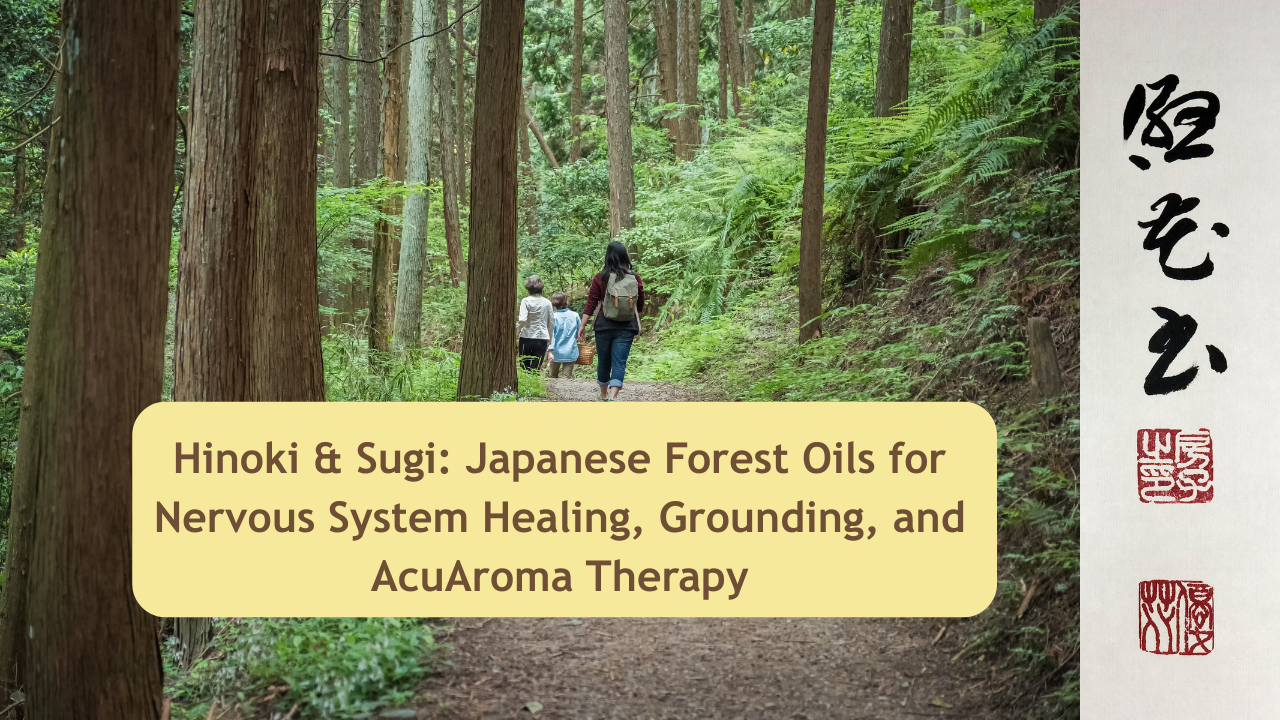
What if your nervous system could remember calm through the wisdom of the forest?
For centuries, the Japanese have understood something modern science is only beginning to fully appreciate:
Nature changes the body.
The practice of Shinrin-yoku, or “forest bathing,” emerged from the observation that time spent among trees profoundly affects stress levels, mood, breathing, immunity, and emotional well-being.
And two trees in particular have long held a sacred place in Japanese culture:
🌲 Hinoki Cypress
🌲 Sugi Cedarwood
These majestic trees are more than symbols of strength and serenity. Their aromatic compounds carry powerful therapeutic properties that support the nervous system, fascia, breath, and emotional regulation.
When paired with Traditional Chinese Medicine acupoints through AcuAroma Therapy, they create a beautiful bridge between ancient plant wisdom and energetic medicine.
Hinoki: The Oil of Calm Presence
Hinoki has a soft, grounding aroma that many describe as:
- expansive
- meditative
- emotionally clarifying
- deeply peaceful
Traditionally used in temples, baths, and sacred architecture, Hinoki is associated with purification and inner stillness.
Modern research suggests forest-derived aromatic compounds called phytoncides may:
- reduce stress hormones
- support immune health
- calm the nervous system
- improve mood and relaxation
Energetically, Hinoki helps soften overstimulation and invites the body into parasympathetic repair mode.
AcuAroma Pairing: Hinoki + Yin Tang
✨ Yin Tang
Location: Between the eyebrows
In TCM, Yin Tang is known for:
- calming Shen (spirit)
- quieting the mind
- reducing agitation and overwhelm
When paired with diluted Hinoki oil, this point becomes a beautiful support for:
- overthinking
- nervous tension
- emotional exhaustion
- sleep preparation
Simple Practice
Apply diluted @ 50% Hinoki to Yin Tang.
Close your eyes.
Take 5 slow breaths.
Let your forehead soften.
Notice how quickly the body responds to safety signals.
Sugi: The Oil of Rooted Strength
Sugi, also known as Japanese Cedarwood, carries a different energetic quality.
Where Hinoki feels expansive and calming, Sugi feels:
- stabilizing
- warming
- grounding
- protective
For generations, Sugi trees have lined sacred pathways and temple grounds in Japan, symbolizing endurance and resilience.
Emotionally, Sugi is wonderful for people who feel:
- depleted
- scattered
- emotionally ungrounded
- chronically stressed
It brings awareness back into the body.
AcuAroma Pairing: Sugi + Governing Vessel 4
✨ Governing Vessel 4 (GV4)
Location: Lower back energy center
In TCM, GV4 is associated with:
- vitality
- foundational energy
- resilience
- restoring depleted reserves
When paired with Sugi essential oil, this combination can feel deeply nourishing for:
- burnout
- fatigue
- nervous system exhaustion
- emotional depletion
Simple Practice
Apply diluted @ 50% Sugi to GV4.
Place both hands over the low back.
Breathe slowly into the belly.
Imagine the steady strength of an ancient cedar tree.
The Heart Connection: Conception Vessel 17
Both Hinoki and Sugi pair beautifully with:
✨ Conception Vessel 17 (CV17)
Located at the center of the chest
CV17 is often called the “Sea of Tranquility.”
This point supports:
- emotional balance
- breath regulation
- chest tension release
- nervous system calming
Try This
Apply Hinoki or Sugi (both @ 50% dilution) to CV17 and take slow, gentle breaths.
This simple ritual can help soften emotional constriction and invite a feeling of spaciousness into the chest.
Why Tree Oils Feel So Regulating
The nervous system constantly asks:
“Am I safe?”
Tree oils help answer that question through:
- aroma
- breath
- fascia relaxation
- parasympathetic signaling
- grounding sensory input
In many ways, these oils remind the body of something ancient:
Humans evolved in relationship with nature.
The body recognizes these signals.
AcuAroma Therapy: Listening Instead of Forcing
One of the most beautiful aspects of AcuAroma Therapy is that it doesn’t force the body to change.
Instead:
- the acupoint communicates
- the oil amplifies the message
- the nervous system responds naturally
No overriding.
No pushing.
Just guidance back to regulation.
The Invitation
Perhaps healing is not about becoming someone new.
Perhaps it is remembering what the body already knows:
How to breathe
How to soften
How to return to center
Sometimes all it takes…
is the wisdom of a tree.
Get rooted with us in the AcuAroma Learning Circle
If you loved the blog and want to learn more about AcuAroma Therapy and staying healthy & vibrant, check out the 30 Day AcuAroma Experience.