The Vagus Nerve, Fascia, and Flow: A TCM Perspective on Regulation and Release
May 06, 2026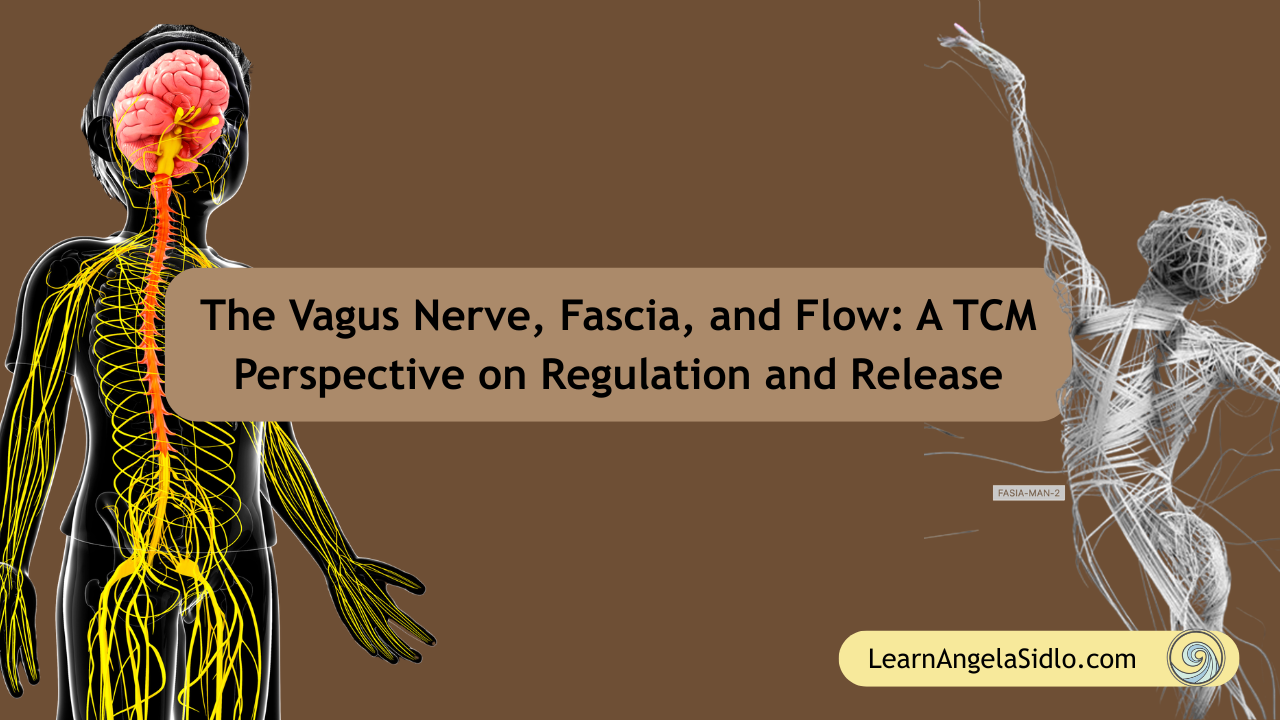
Think of the vagus nerve as a bridge…
Between body and emotion, between fascia and feeling, between tension and release.
In modern wellness conversations, the vagus nerve is often described as the key to calming the nervous system. But through a Traditional Chinese Medicine (TCM) lens, we understand something even deeper:
Regulation is not something you force. It’s something you allow, by restoring flow.
Fascia: The Physical Expression of Qi
Fascia is more than connective tissue. It is a living, responsive network that reflects the state of your internal environment. When Qi (energy) flows freely: fascia is supple, movement feels easeful, emotions process naturally. When Qi becomes stagnant: fascia tightens, the body holds tension, emotional patterns become “stuck”. This is where the vagus nerve comes in.
The Vagus Nerve: Listening to the Body’s Terrain
The vagus nerve is constantly sensing your internal state. It acts as the “listener.” When fascia is tight, signals of stress increase. When fascia softens, the vagus nerve shifts toward calm.
From a TCM perspective, this mirrors the movement (or stagnation) of Qi through the meridian system. So instead of “hacking” the nervous system,
we support the terrain the nervous system is responding to, guiding it back to safety.
AcuAroma + Acupoints: Guiding the Shift
By combining essential oils with specific acupoints, we create gentle but powerful signals that influence both fascia and the nervous system.
Ear Shenmen + Bergamot (25% dilution)
Balances the hemispheres of the brain
Initiates a parasympathetic response
Lifts, clarifies, and disperses stuck energy
Liver 3 + Blue Tansy (15% dilution)
Supports the smooth flow of Liver Qi
Helps release internal pressure and emotional stagnation
Encourages fascia to soften from within
Gallbladder 21 + Sweet Marjoram (50% dilution)
Relaxes the sinews and releases held tension in the shoulders
Commonly where stress accumulates physically
Signals the body that it’s safe to let go
Spleen 21 + Blue Tansy (15% dilution)
Known as the “Great Luo” point—supports whole-body integration
Helps the system process and distribute change
Brings coherence between structure and sensation
Simple Practices to Support the Vagus Nerve + Fascia
These are not techniques to “fix” the body, they are invitations for the body to respond.
1. Ear Shenmen + Breath Awareness (2–3 minutes)
Apply Bergamot (25% dilution) to Ear Shenmen.
Gently hold the point between your fingers.
Now:
- Inhale slowly through the nose
- Exhale longer than you inhale
- Let the jaw soften
Why it works:
The ear is a direct access point to the vagus nerve.
Paired with slow exhalation, it signals safety quickly.
2. Liver 3 + Gentle Foot Sway (2–3 minutes)
Apply Blue Tansy (15% dilution) to Liver 3.
Stand or sit with feet grounded.
Slowly begin to:
- Shift your weight side to side
- Let the movement be small and effortless
- Feel into the soles of your feet
Why it works:
This subtle movement encourages Qi flow and softens fascial holding in the lower body.
3. Gallbladder 21 + Shoulder Melt (2 minutes)
Apply Sweet Marjoram (50% dilution) to Gallbladder 21.
Then:
- Inhale and gently lift your shoulders
- Exhale and let them drop naturally
- Repeat 5–6 times
Add a soft sigh on the exhale if it feels natural.
Why it works:
This releases one of the body’s primary stress-holding zones and signals the vagus nerve to downshift.
4. Spleen 21 + Wrap + Hold (3 minutes)
Apply Blue Tansy (15% dilution) to Spleen 21 (side of the ribcage).
Then:
- Wrap your arms gently around your body
- Hold the ribcage softly
- Breathe into the sides of your body
Why it works:
This supports integration—helping the body process and distribute the shift from tension to ease.
5. Full-Body Integration Pause (2–5 minutes)
After applying the points, simply pause. No technique. No effort.
Just notice:
- Temperature changes
- Softening
- Breath depth
- Subtle shifts
This is where regulation happens.
For proper digestion, detoxification and immune support, the body needs to be in parasympathetic state at least 80% of the time.
No Forcing. No Overriding.
In TCM, healing is not about control—it’s about relationship.
When you stimulate these points with intention:
- You’re not forcing the body to relax
- You’re not overriding symptoms
- You’re creating the conditions for safety
And when the body feels safe, the vagus nerve naturally shifts toward regulation.
The Deeper Invitation
What if your tension isn’t something to fight, but something to listen to?
What if your fascia is holding a story and your nervous system is waiting for it to soften?
AcuAroma Therapy offers a way to engage this conversation.
Not by doing more, but by working with the intelligence already within you.
If this interests you, join the AcuAroma Learning Circle to explore more each month. https://www.learnangelasidlo.com/learningcircle
If you loved the blog and want to learn more about AcuAroma Therapy and staying healthy & vibrant, check out the 30 Day AcuAroma Experience.